Should Real Estate be considered a Public Asset?
Editie: 33- Public vs. Private
Published on: 27 mei 2026
Everyday billions of people wake inside buildings that shape how well they sleep, the air they breathe, the distance they travel to work, and the opportunities available to their children. Yet the environments that most influence human wellbeing are rarely governed by doctors, educators, or public health institutions. Instead, they are largely determined by property markets and the investment strategies of real estate capital.
Cities are usually described through the language of markets. Buildings are framed as assets, land as a commodity, and urban development as a process organised around investment returns and capital flows. Over the past four decades, this logic has intensified as real estate has become increasingly integrated into global financial markets. Today, the world’s real estate is estimated to be worth more than $180 trillion, making it the largest asset class on the planet (Barnes & Rambus, 2014). Within this framework, buildings are primarily evaluated according to their capacity to generate financial yield.
Yet this framing obscures a more consequential reality. Buildings are not simply financial instruments. They are environments that shape human biology and organise social life. People in industrialised societies now spend around 90 percent of their lives indoors (Klepeis et al., 2001) . The design, ownership, location, and management of buildings therefore influence the conditions under which most human life unfolds. Light exposure regulates circadian rhythms and sleep, influencing cognitive performance, metabolic health, and long-term wellbeing (Chellappa et al., 2011; Foster et al., 2017). At the urban scale, the location and affordability of housing shape access to schools, employment, and safe neighbourhoods, while processes such as displacement and segregation influence educational attainment, crime exposure, and the persistence of urban poverty (Sampson, 2013; Sharkey, 2013).
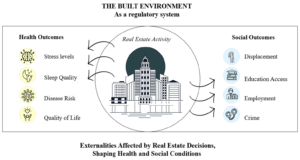
Figure 1: Built Environment As A Regulatory System. Examples Of Health And Social Consequences Of Real Estate Activity; Source: Authors Own.
This raises a fundamental question. If we now know that buildings influence human health, life trajectories, and social inequality at population scale, should the environments that shape these outcomes be governed primarily through markets? Or are some aspects of real estate simply too important to be treated only as private assets?
For example, when a large-scale developer delivers a major mixed-use scheme, the project is typically appraised in terms of development margin, absorption rates, rental values, and exit yield. Yet the same intervention can reconfigure the surrounding urban fabric beyond the site boundary. Densification and land value uplift may lead to displacement, defined as the involuntary relocation of residents who can no longer afford rising rents or local taxes, or who lose access to social housing, disrupting social networks, family proximity, and continuity of schooling. At the same time, redevelopment of commercial space, such as offices and retail, may increase parking provision and traffic flows, elevating local air pollution and noise exposure, with consequences for sleep quality, walkability, and child safety.
The biological consequences are well established. Poor housing conditions, including damp, inadequate insulation, overheating, and indoor air pollution, are strongly associated with respiratory illness, cardiovascular disease, and mental health problems, and globally, substandard housing contributes to more than 3.8mn premature deaths each year (WHO, 2018).Walkable neighbourhoods, defined as areas where daily needs such as shops, services, schools, and public transport can be reached safely and conveniently on foot, are associated with significantly higher levels of physical activity, with implications for obesity, diabetes, and cardiovascular health (Sallis et al., 2016).Indoor air quality influences cognitive performance, and environmental noise activates physiological stress responses with measurable cardiovascular consequences (Allen et al., 2016; Basner et al., 2014).
But the effects of real estate are not only biological. They are also social in the deepest structural sense. Rising property values and speculative redevelopment can displace long established communities, pushing lower-income households into more peripheral areas that are often less connected to employment, services, and public infrastructure (Freeman & Braconi, 2007; Minton, Anna, 2017; Zuk et al., 2017).
This is where market failure becomes most evident. While parts of the commercial sector have begun to engage with health, wellbeing, and social inclusion through certification frameworks such as WELL and BREEAM, these frameworks remain predominantly input-focused, emphasising the presence of design features or policies rather than demonstrated impacts on occupants, such as physiological stress regulation or long-term health outcomes (Doan et al., 2017; Kokatnur et al., 2025; Tsirovasilis et al., 2025). More fundamentally, their asset-level focus overlooks the spatial and systemic externalities of real estate, including displacement, inequality, and the redistribution of risk (Aalbers, 2016; Owens et al., 2004). Many of the most important consequences of real estate are therefore externalised to society, appearing later as healthcare costs, reduced educational attainment, increased policing burdens, lower productivity, entrenched poverty, and spatial inequality (Chetty et al., 2016; Rydin et al., 2012; WHO, 2018).
Financialisation and the extraction of social value
The financialisation of real estate has reshaped not only housing markets but also the logic of commercial development and large-scale urban regeneration. Office buildings, mixed use districts, and major redevelopment projects are increasingly embedded within global capital markets, where assets are valued primarily for their capacity to generate stable income streams and capital appreciation (Aalbers, 2016; Fields & Uffer, 2016). Institutional investors, pension funds, and sovereign wealth funds therefore exert growing influence over which urban environments are built, upgraded, or redeveloped.
Within this system, development feasibility models become the decisive mechanism through which urban space is allocated. Projects proceed only when expected returns exceed the combined costs of land, construction, and finance, embedding financial performance at the centre of development decision-making (Adair et al., 1994). Because social outcomes such as affordability, local economic diversity, community stability, or public health rarely enter these calculations, they are effectively excluded from the investment logic that governs development.
Uses capable of sustaining higher rents and stronger covenant strength therefore dominate prime urban locations, while activities with greater social value but lower financial returns become economically unviable.
In this sense, financialisation does not simply transform buildings into financial assets. It reorganises cities around the priorities of capital allocation, allowing financial gains from redevelopment to be captured privately while many of the social consequences of displacement, exclusion, and spatial inequality are absorbed elsewhere in the urban system (Aalbers, 2016; Mazzucato, 2019).
The built environment as social infrastructure
These dynamics suggest that the built environment should be understood less as a commodity and more as a form of social infrastructure. The term is typically used to describe spaces such as schools, libraries, parks, and community centres that support collective life and public wellbeing (Atkins, 2022; Klinenberg, 2019). Yet this definition is too narrow. These functions are increasingly mixed and overlapping, with boundaries between residential, commercial, and civic uses becoming more fluid, further challenging narrow, traditional definitions of social infrastructure (Geyer, 2023).
Buildings influence society not simply through individual transactions but by structuring the distribution of risk and opportunity across populations.Recognising this makes the distinction between private property and public infrastructure increasingly difficult to sustain. Buildings may be privately owned, but the consequences of their location, design, pricing, and management extend well beyond the property’s boundary.
Historically, societies have reached similar conclusions about other systems that organise everyday life. Water supply, sanitation networks, electricity grids, and public transport were once provided largely through private markets. Over time, however, governments recognised that these systems were too fundamental to public welfare to be governed solely through profit-seeking incentives. Because failures in these systems produced widespread risk of harm to health and society, they gradually came to be treated as forms of public infrastructure (Banerjee et al., 2008; Bogart, 2022)
The built environment may represent the next frontier of this logic. Like water systems or transport networks, buildings structure basic conditions of life. Unlike those systems, however, their governance remains overwhelmingly organised through private property markets.
This asymmetry matters because buildings influence human wellbeing more continuously than almost any other system. They shape the air people breathe, the light they are exposed to, the noise they experience, the distances they travel, and the neighbourhoods in which their lives unfold. At the same time, the location and pricing of real estate influence educational opportunity, exposure to crime, access to services, and the risk of displacement.
When systems with such profound consequences are governed primarily through financial logic, an important question emerges:
Realigning real estate with public value
If real estate functions simultaneously as an asset class and as biological and social infrastructure, then the central question is how to govern it accordingly. The challenge is not simply better planning, but a deeper realignment of valuation, finance, and responsibility.
Four shifts are especially important.
- Reframing Property Valuation
Property valuation functions as one of the primary informational systems through which real estate markets operate. Current valuation models prioritise financial indicators such as rental income, comparable transactions, and development potential (Stokes, 2024). Yet these metrics capture only a narrow portion of the value buildings generate.
Expanding valuation frameworks to incorporate indicators related to environmental quality, accessibility, neighbourhood safety, and public health would begin to recognise the wider biological and social impacts of the built environment. Such a shift would not simply add ethical considerations to valuation. It would reshape the informational architecture through which capital assesses and prices urban assets.
- Redistributing the Value Generated by Urban Development
Urban redevelopment frequently generates substantial increases in land value through collective processes such as infrastructure investment, zoning change, and neighbourhood transformation. Yet these gains are often captured privately despite being enabled by public investment and social dynamics.
Strengthening
- Recognising Real Estate as Foundational Social Infrastructure
Certain forms of real estate, including housing, workplaces, and neighbourhood environments, function less like conventional commodities and more like foundational infrastructure. They shape the spatial conditions through which health, safety, education, and economic participation become possible.
Recognising this systemic role does not necessarily require widespread public ownership. But it does justify governance models that emphasise stewardship, long term resilience, and societal stability alongside financial performance.
- Aligning Capital Allocation with Social and Health Outcomes
Finally, the financial systems that fund real estate development represent a powerful but underutilised lever for change. Mortgage lending, investment capital, and development finance strongly influence which buildings are constructed and which neighbourhoods receive investment.
Linking financing conditions to indicators of environmental quality, accessibility, and neighbourhood wellbeing, in ways analogous to emerging green finance frameworks, could gradually align capital allocation with broader societal outcomes.
Rethinking ownership and responsibility
The question of whether real estate should be considered a public asset is therefore not merely rhetorical.
Buildings shape the biological and social conditions through which human life unfolds. They influence sleep, stress, safety, educational opportunity, mobility, and exposure to environmental risk. They affect where people live, how they move, and what opportunities are available to them across the life course.
Recognising this does not imply that all real estate should become publicly owned. But it does raise a fundamental question about governance.
If the environments that shape health, safety, and opportunity across entire populations are produced through real estate systems, should some aspects of those systems be treated as public assets whose stewardship carries collective responsibilities?
Answering that question may become one of the central urban governance challenges of the twenty-first century.
About the author: Sophie Schuller
Sophie Schuller is a PhD researcher at Eindhoven University of Technology and Research Manager in Public Real Estate at TU Delft, working at the intersection of neuroscience, architecture, and real estate. Her research examines how buildings function as biological and social systems, shaping physiological stress, cognitive performance, and wider health outcomes, while also structuring social value across populations and urban systems. A central focus of her work is how the built environment influences wellbeing, inclusion, and equitable life chances, and how these dimensions can be embedded within real estate decision making. Combining neurophysiological methods with urban and economic analysis, she investigates both the immediate and systemic impacts of buildings. With over 20 years of professional experience, including senior roles at Cushman & Wakefield and Ernst and Young, she brings a practice-based and social perspective to questions of valuation and finance, exploring how these systems can be reconfigured to support healthier and more equitable environments. Sophie is currently a Visiting Researcher at Cambridge University, and an Associate Editor of Intelligent Buildings International. She holds an MSc in Neuroscience and Psychology from King’s College London, an MBA from London Business School, and a BSc in Urbanism.

References:
Aalbers, M. B. (2016). The Financialization of Housing: A political economy approach. Routledge. https://doi.org/10.4324/9781315668666
Adair, A. S., Berry, J. N., & McGreal, W. S. (1994). Investment Decision Making: A Behavioural Perspective. Journal of Property Finance, 5(4), 32–32. https://doi.org/10.1108/09588689410080275
Allen, J. G., MacNaughton, P., Satish, U., Santanam, S., Vallarino, J., & Spengler, J. D. (2016). Associations of Cognitive Function Scores with Carbon Dioxide, Ventilation, and Volatile Organic Compound Exposures in Office Workers: A Controlled Exposure Study of Green and Conventional Office Environments. Environmental Health Perspectives, 124(6), 805–812. https://doi.org/10.1289/ehp.1510037
Atkins, L. C. (2022). Palaces for the people: How social infrastructure can help fight inequality, polarization, and the decline of civic life: by Eric Klinenberg, New York, Penguin Random House, 2018, 277 pp., US$28.00 (hardback), ISBN 978-1524761165. Community Development, 53(4), 516–517. https://doi.org/10.1080/15575330.2022.2118937
Banerjee, A., Iyer, L., & Somanathan, R. (2008). Public Action for Public Goods. Handbook of Development Economics, 4, 3117–3154.
Barnes, Y., & Rambus, M. (2014). Around the world in dollars and cents (p. 24). Savills. https://www.savills.com/research_articles/255800/149967-1
Basner, M., Babisch, W., Davis, A., Brink, M., Clark, C., Janssen, S., & Stansfeld, S. (2014). Auditory and non-auditory effects of noise on health. The Lancet, 383(9925), 1325–1332. https://doi.org/10.1016/S0140-6736(13)61613-X
Bogart, D. (2022). Infrastructure and institutions: Lessons from history. Regional Science and Urban Economics, Urban Economics and History, 94, 103626. https://doi.org/10.1016/j.regsciurbeco.2020.103626
Chellappa, S. L., Steiner, R., Blattner, P., Oelhafen, P., Götz, T., & Cajochen, C. (2011). Non-Visual Effects of Light on Melatonin, Alertness and Cognitive Performance: Can Blue-Enriched Light Keep Us Alert? PLOS ONE, 6(1), e16429. https://doi.org/10.1371/journal.pone.0016429
Chetty, R., Hendren, N., & Katz, L. F. (2016). The Effects of Exposure to Better Neighborhoods on Children: New Evidence from the Moving to Opportunity Experiment. American Economic Review, 106(4), 855–902. https://doi.org/10.1257/aer.20150572
Doan, D. T., Ghaffarianhoseini, A., Naismith, N., Zhang, T., Ghaffarianhoseini, A., & Tookey, J. (2017). A critical comparison of green building rating systems. Building and Environment, 123, 243–260. https://doi.org/10.1016/j.buildenv.2017.07.007
Fields, D., & Uffer, S. (2016). The financialisation of rental housing: A comparative analysis of New York City and Berlin. Urban Studies, 53(7), 1486–1502. https://doi.org/10.1177/0042098014543704
Foster, R., Kreitzman, L., Foster, R., & Kreitzman, L. (2017). Circadian Rhythms: A Very Short Introduction. Oxford University Press.
Freeman, L., & Braconi, F. (2007). Gentrification and Displacement New York City in the 1990s. Journal of the American Planning Association, 70(1). https://doi.org/10.1080/01944360408976337
Geyer, H. (2023). The Theory and Praxis of Mixed Use Development (SSRN Scholarly Paper No. 4481432). Social Science Research Network. https://doi.org/10.2139/ssrn.4481432
Klepeis, N. E., Nelson, W. C., Ott, W. R., Robinson, J. P., Tsang, A. M., Switzer, P., Behar, J. V., Hern, S. C., & Engelmann, W. H. (2001). The National Human Activity Pattern Survey (NHAPS): A resource for assessing exposure to environmental pollutants. Journal of Exposure Science & Environmental Epidemiology, 11(3), 231–252. https://doi.org/10.1038/sj.jea.7500165
Klinenberg, E. (2019). Palaces for the People door Eric Klinenberg—Managementboek.nl. The Crown Publishing Group. https://www.managementboek.nl/boek/9781524761172/palaces-for-the-people-eric-klinenberg
Kokatnur, T., Faris, F., Gunay, B., O’Brien, W., & Azar, E. (2025). The WELL Building Standard: A literature review and bibliometric analysis of a nascent field. Journal of Building Engineering, 103, 112121. https://doi.org/10.1016/j.jobe.2025.112121
Mazzucato, M. (2019). The Value of Everything. Penguin. https://www.penguin.co.uk/books/280466/the-value-of-everything-by-mazzucato-mariana/9780141980768
Minton, Anna. (2017). Big Capital: Who Is London For? Penguin.
Pigou, A. (2017). The Economics of Welfare. Routledge. https://doi.org/10.4324/9781351304368
Rydin, Y., Bleahu, A., Davies, M., Dávila, J. D., Friel, S., De Grandis, G., Groce, N., Hallal, P. C., Hamilton, I., Howden-Chapman, P., Lai, K.-M., Lim, C., Martins, J., Osrin, D., Ridley, I., Scott, I., Taylor, M., Wilkinson, P., & Wilson, J. (2012). Shaping cities for health: Complexity and the planning of urban environments in the 21st century. The Lancet, 379(9831), 2079–2108. https://doi.org/10.1016/S0140-6736(12)60435-8
Sallis, J. F., Cerin, E., Conway, T. L., Adams, M. A., Frank, L. D., Pratt, M., Salvo, D., Schipperijn, J., Smith, G., Cain, K. L., Davey, R., Kerr, J., Lai, P.-C., Mitáš, J., Reis, R., Sarmiento, O. L., Schofield, G., Troelsen, J., Van Dyck, D., … Owen, N. (2016). Physical activity in relation to urban environments in 14 cities worldwide: A cross-sectional study. The Lancet, 387(10034), 2207–2217. https://doi.org/10.1016/S0140-6736(15)01284-2
Sampson, R. J. (2013). Great American City: Chicago and the Enduring Neighborhood Effect (W. J. Wilson, Ed.). University of Chicago Press. https://press.uchicago.edu/ucp/books/book/chicago/G/bo5514383.html
Sharkey, P. (2013). Stuck in Place: Urban Neighborhoods and the End of Progress toward Racial Equality. University of Chicago Press. https://press.uchicago.edu/ucp/books/book/chicago/S/bo14365260.html
Stokes, R. (2024, January 24). New edition of the International Valuation Standards (IVS) published. International Valuation Standards Council. https://ivsc.org/new-edition-of-the-international-valuation-standards-ivs-published/
Tsirovasilis, E., Katafygiotou, M., & Psathiti, C. (2025). Comparative Assessment of LEED, BREEAM, and WELL: Advancing Sustainable Built Environments. Energies, 18(16), 4322. https://doi.org/10.3390/en18164322
WHO. (2018). WHO Housing and health guidelines (p. 172). Environment, Climate Change and Health (ECH),. https://www.who.int/publications/i/item/9789241550376
Zuk, M., Bierbaum, A., Chapple, K., Gorska, K., & Loukaitou-Sideris, A. (2017). Gentrification, Displacement, and the Role of Public Investment—Miriam Zuk, Ariel H. Bierbaum, Karen Chapple, Karolina Gorska, Anastasia Loukaitou-Sideris, 2018. Journal of Planning Literature, 33(1), 31–44. https://doi.org/10.1177/0885412217716439
Mail the editors